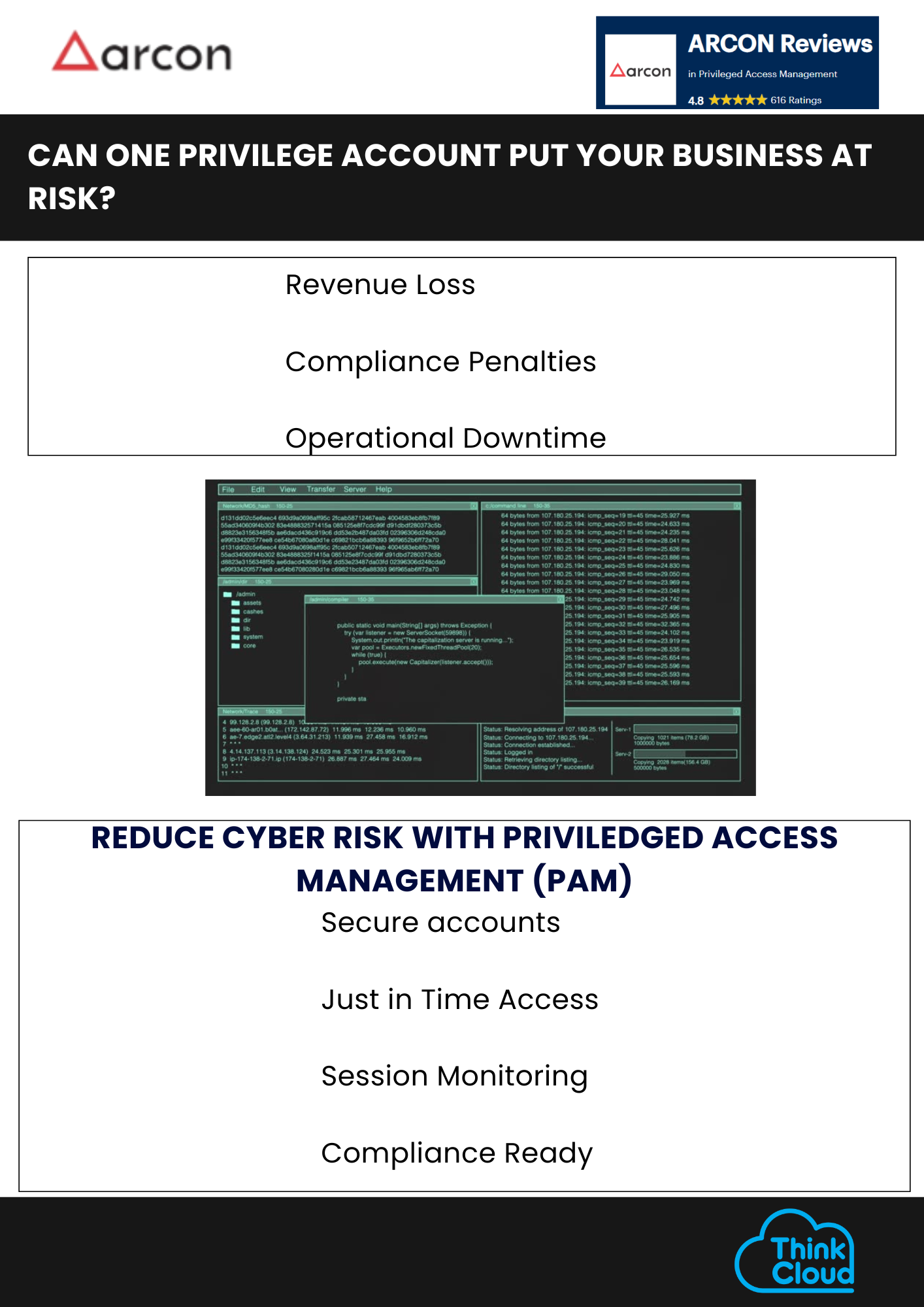
Most executives assume cyber incidents begin with sophisticated attacks.
In reality, many major breaches start with something far simpler: a privileged account with excessive access and insufficient oversight.
When high-privilege credentials are compromised, the consequences extend far beyond the IT department:
📉 Revenue Impact – Disrupted operations, customer churn, and reputational damage can affect growth for months.
⚖️ Regulatory Exposure – Non-compliance with data protection and industry regulations can result in significant financial penalties.
🛑 Business Interruption – Operational downtime affects productivity, service delivery, and customer confidence.
📊 Board-Level Risk – Increasingly, cybersecurity is viewed as a business resilience issue rather than a technology issue.
The organizations best positioned to manage this risk are adopting stronger governance around privileged access through:
✅ Secure credential vaulting
✅ Just-in-Time (JIT) access
✅ Real-time session monitoring
✅ Continuous audit and compliance readiness
The question for leadership teams isn't whether privileged accounts exist.
It's whether the business has sufficient visibility and control over who can access critical systems, when, and why.
What is currently the biggest challenge in balancing operational agility with stronger access controls across your organization?
If you're currently facing challenges around privileged access, compliance requirements, or reducing cyber risk across your organization, feel free to connect with us. We're always happy to exchange insights and discuss practical approaches to strengthening business resilience.

Have Any Questions?
603-3051 4438